
1921–1955: Beginnings
The History of the Alabama Symphony Orchestra traces its beginnings to 1921, when on Friday, April 29, a group of musicians joined to perform at the Birmingham Music Festival at the Old Jefferson Theater. It was not until 1933, however, that the orchestra gave its first formal concert, when the Birmingham Music Club presented the orchestra under the direction of Dorsey Whittington at Phillips High School.
On October 23, 1933, the Birmingham Symphony Association was officially formed, and J.J. Steiner was installed as president. With a budget of $7,000, four concerts were planned for the first season. By the 1935–36 season, the orchestra had as many as eighty players and a budget of $10,000. A full rehearsal cost $100, and guest artists’ fees were low by today’s standards—the renowned composer-pianist Percy Grainger was paid $350 for his appearance in October 1939.
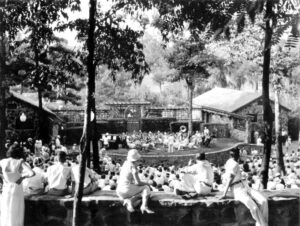
Symphony concerts continued throughout the 1930s with annual series at Phillips High School auditorium. By the late 1940s, annual children’s Symphony Appreciation concerts were inaugurated. In 1948, William Mechler, a trombonist and member of the Birmingham Symphony, organized the Youth Symphony.
1956–1979: Early Growth and Reorganization
The Symphony Orchestra changed its name to the Birmingham Symphony Orchestra and hired Arthur Bennett Lipkin, violinist with the Chicago Symphony Orchestra, as conductor in 1949. By 1950, the orchestra had grown to include 75 musicians. Lipkin remained as conductor until 1956.
During this period, the orchestra expanded its repertoire, welcomed distinguished guest artists, and grew in community recognition. Although financial resources remained fragile, local volunteers and supporters helped sustain the organization.
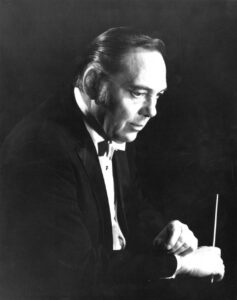
In 1964, Amerigo Marino became the orchestra’s fourth music director. He had previously been the composer/conductor of the CBS Radio and Television Orchestra and a pianist with the Los Angeles Philharmonic. Marino was also one of four winners of the 1963 Ford Foundation Conductors Project.
In 1966, the orchestra was awarded a $600,000 grant from the Ford Foundation, payable over ten years and requiring a matching amount. Volunteers raised the match in record time. That same year, the Birmingham Symphony absorbed the Alabama Pops Orchestra, conducted by Walter Moeck.
In 1979, the orchestra changed its name to the Alabama Symphony Orchestra, reflecting its statewide support. Amerigo Marino remained the music director in Alabama until 1984. Through the 1980s, the orchestra expanded concerts and outreach programs across Alabama, but by 1993, financial pressures forced the organization to cease operations.
1994–1996: Rebirth
Determined supporters and musicians worked tirelessly to revive the orchestra. Under the leadership of Dr. Charles A. Brown, Birmingham physician and ASO Board President, fundraising and community efforts succeeded. The Alabama Symphony Orchestra was reorganized and officially resumed concerts in 1997.
1997–2015: Expansion
In 1997, the orchestra inaugurated its first season at the newly built Alys Stephens Center. The ASO expanded programming with Masterworks, Pops, Coffee Concerts, and statewide outreach, reaching tens of thousands of students annually.
The ASO Youth Orchestra flourished, offering training and opportunities to hundreds of young musicians. International recognition also grew as the orchestra collaborated with world-class guest artists, premiered new works, and expanded into contemporary repertoire.
Music directors during this period included Paul Polivnick and Justin Brown, both of whom raised the orchestra’s artistic profile. In 2011, the ASO was awarded the John S. Edwards Award for Strongest Commitment to New American Music, ASCAP’s highest honor, recognizing the orchestra’s commitment to innovative programming and new music.
2015–Present: The ASO Today
In the 2015–2016 season, the baton was passed to internationally acclaimed conductor Carlos Izcaray, who became the ASO’s new Music Director. Izcaray leads the ASO in a wide variety of concerts and plays a key role in programming, community engagement, and educational activities.
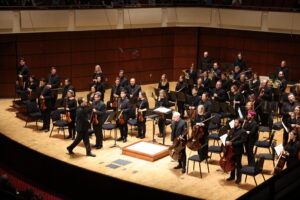
Izcaray has a distinguished career as both conductor and instrumentalist. He has premiered and commissioned instrumental, choral, and operatic works by composers worldwide. He is a regular guest at major international festivals and has been praised as a passionate performer of standard repertoire. As a cellist, he served as Principal Cello and Artistic President of the Venezuela Symphony Orchestra prior to focusing fully on conducting. He also served as Music Director of the American Youth Symphony.
During his first year, Izcaray launched ambitious new programs, including the Sound Investment Composer initiative and the Sound Edge Festival, a multi-day event that placed the orchestra in new venues across Birmingham. These efforts expanded the ASO’s reach, attracted new audiences, and reinforced the orchestra’s role as a statewide cultural leader.
Today, the Alabama Symphony Orchestra continues its mission to make professional symphonic music available to every resident of Alabama. With strong community support and visionary leadership, the ASO looks confidently to the future, building on its traditions while embracing innovation.