
Blogs
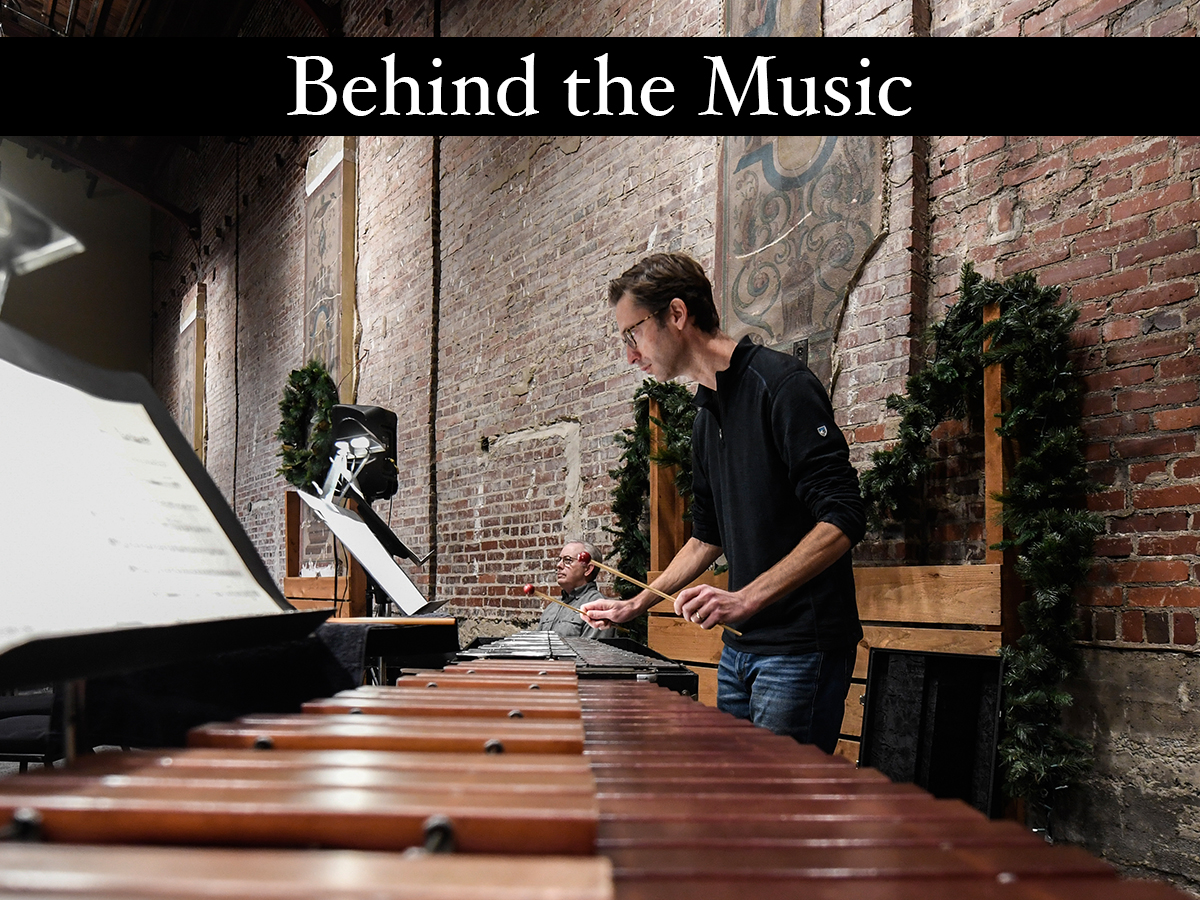
Behind the Music: Principal Percussionist Mark Libby on Snare Drums, Trash Cans, and the Triangle
Welcome and Introduction
In April 2026, ASO’s Insider Evenings series welcomed Principal Percussionist Mark Libby for an intimate conversation with donors — his first time speaking at one of these events. What followed was a candid, wide-ranging discussion about his life in music, his journey to Birmingham, and the surprisingly vast world of percussion.
Mark has been an ASO member since 2000, when he joined from the Dayton Philharmonic. Originally from Wisconsin, he has called Alabama home for many years — and that evening, donors had the chance to hear his story firsthand.
Mark’s Opening Remarks
Mark Libby:
Thank you. I have a lot of great questions ready, and I’d love to open things up for conversation. But what I thought I’d do tonight is start by sharing a little about my background — how I got started in music, what my path looked like, and what it’s like to work with the symphony. What we do is pretty different from what most people imagine, so I thought it would be interesting to share some of that.
I’ll say a few words about my work with the orchestra, but first I’d like to play a short snare drum piece — just to make things a little more interesting.
Early Influence of Buster Bailey
This is a very short snare drum piece written by a very famous percussionist — famous in the percussion world, at least. His name was Buster Bailey. He was with the New York Philharmonic from 1949 to 1991. If you ever watched orchestral performances on television in the ’50s and ’60s, Buster was one of the guys in the back playing drums.
One reason I mention him is that he wrote this piece for a television program. I’m hoping you’re my perfect audience for this — do any of you remember Omnibus? Yes! Some of you do — you’re not faking it. When I mention it to people my age, they have no idea what I’m talking about. But it ran for about eight seasons on Sunday afternoons in the ’50s. It featured programs on science, the arts, and the humanities — you can find some of them on YouTube. Buster wrote this piece for the show, apparently as an introduction to a segment. My teacher in Cleveland had a copy of a copy of a VHS. I’ve seen it — though it may be the one thing in the world that’s not on YouTube.
Anyway, this is a short snare drum piece by Buster Bailey. Fair warning — it’s quite loud.
[Mark performs a snare drum piece.]
Buster Bailey Stories
Thank you. Buster was a tremendous musician. He taught at Juilliard for many years and influenced generations of percussionists. My Buster Bailey story: I met him once. I didn’t study with him directly, but many of the people I studied with did. That’s one of the interesting things about music — there’s a lineage. My teacher studied with Buster, so even though I never met him directly, I feel like I absorbed his ideas about music and playing secondhand through his students.
When I was in high school, I went to the Aspen Music Festival in Colorado. Many of the faculty there were from New York, so I heard plenty of Buster stories. I graduated from high school in 1992, right around the time Buster retired. I auditioned at Juilliard that year — and there he was at the table. The principal percussionist of the New York Philharmonic, sitting right there. I was setting up my drum when he asked, “Where are you from?” I said Wisconsin. He said, “I’m from Wisconsin, too — have you ever been to Baraboo?”
I knew Buster loved circus music. He had a real joy for life — that’s why I brought the picture. Whenever people talk about Buster, they mention his infectious enthusiasm. He loved circus music so much that he’d go play with circus bands in the summers. And in Baraboo, Wisconsin, there’s the Circus World Museum. So when Buster asked if I’d been there, I said, “I don’t know much, but I have been to the Circus World in Baraboo.” Buster lit up. He was thrilled — like it was the most exciting thing. That was my Buster Bailey moment. Unfortunately, it was all downhill from there.
Background in Music
Mark Libby:
I’m from Wisconsin. I didn’t grow up in a particularly musical family — my dad was musical, and his mother was a vocalist — but I wouldn’t call us especially musical overall. I was fortunate to be part of a strong public school music program, and I had a wonderful private teacher. So it was a really good environment to grow up in.
I went to the Aspen Music Festival in high school, encouraged by my teacher there. It was eye-opening — being around older students, including college- and conservatory-level players. Being one of the youngest, I barely knew what college-level playing looked like, but being around those students opened my eyes. I auditioned for music conservatories after high school and ended up at the Cleveland Institute of Music, and loved it. I lived in Cleveland for eight years. Just really tremendous years of my life.
As mentioned, I played part-time with the Dayton Philharmonic for three seasons and was fortunate to secure a position here. That audition was around 2000, and I’ve been here ever since. I’ve really enjoyed being part of the Birmingham and Alabama community. I love bringing my colleagues and the great music we perform to our audiences.
Q&A — Instruments and Practice
Audience Member:
How many different instruments do you play? Do you play them all equally well, or do you favor some over others?
Mark Libby:
That’s one of the things I really enjoy about being a percussionist — we play a wide range of instruments. Most of us start on the snare drum. I grew up in Wisconsin, and my next-door neighbor had a drum set, which became my entry point. I played in marching band and jazz ensemble, all of it as a kid.
Then you branch out. You learn the keyboard percussion instruments — marimba, xylophone, vibraphone. I had to learn to read pitched music, and I was terrible at it at first. Snare drum music is all on one line. Then suddenly I had to read a full staff on the marimba — it was awful. It took me forever, but I stuck with it, and now I play all the keyboard instruments. Triangle, cymbals — we can talk about those in a bit.
It’s one of my favorite things about being a percussionist — the variety. It’s not easy. A piano player might practice six hours on one instrument. I might spend four hours on a single marimba piece, then four hours on a snare piece. But it’s its own kind of fun.
Practice Time
Audience Member:
How do you practice at home? Do you have all of that at home?
Mark Libby:
I’m in the basement. [laughter] I have a little studio down there. I have a marimba at home, a xylophone, a wood block, steel instruments, and drum gear. Most of us have what we need at home. It’s not a small investment — I told my daughter, when she started violin, that we’d start with a starter instrument and see how it goes.
Timpani
Audience Member:
We saw you playing timpani at a concert a while back. Do you enjoy it? Does it feel very different from other percussion?
Mark Libby:
I really do love playing timpani. When I was in college, I thought maybe that’s the direction I’d go. In a professional orchestra, it’s typically split — you’re either a timpanist or a percussionist. Jay Burnham is our timpanist, and he’s fantastic. He plays all the timpani. Lucas Vogelman and I play in the percussion section. By necessity, most people focus on one or the other because preparing for auditions for both is extremely demanding.
But I love playing timpani whenever I get the chance. The big difference is intonation. As a percussionist, you generally don’t worry about intonation — it’s set. With timpani, you have to tune the drums, and the pitch can drift during a concert as the heads respond to changes in temperature and humidity. You need a great ear. It’s very demanding that way, but also really rewarding — you feel even more connected to the orchestral sound because your pitch blends with everyone else’s.
Historically, timpani heads were made from calfskin. They sounded beautiful but were incredibly susceptible to weather changes — real humidity nightmares. Now they’re plastic, which is much more stable. But people still use natural heads, especially in period instrument ensembles. They sound fabulous. You just have to take very good care of them.
Tuning
Audience Member:
Is there a tuning gauge that helps?
Mark Libby:
Yes — there’s a gauge on the drum that gives you a reference point. It helps a lot. You can tune the drum, note where the gauge reads, and then check it during the concert. But you still have to use your ear as the final judge. The gauge tells you where you were, not necessarily where you need to be right now.
Counting Rests — The Percussionist’s Challenge
Audience Member:
How do you know when to come in? What does your music sheet look like?
Mark Libby:
A lot of the time, we’re not playing — we’re sitting and counting. We might sit for a very long time, then stand up and play a few notes, then sit back down. The part can show something like “tacet,” which means don’t play until further notice — for a long stretch. And then it’s like, wait, how long was that? [laughter]
It is genuinely difficult. We have to know the piece and the score well enough to track where we are. I always tease string players — and my wife plays violin, so I can say this — because they can’t count rests. If they have a long rest, they’re lost, because they’re used to always playing. We might have concerts where I play 30 notes total. Those guys play 30 notes in the first two minutes. So, to be fair, they face a different kind of challenge. But counting long rests is a real skill in our world.
Unusual Instruments
Audience Member:
What’s the most unusual instrument you’ve ever had to play?
Mark Libby:
Great question. In the percussion section, we get to play some unusual things — especially in contemporary music. Bottles, trash cans, big metal plates. I’ll tell one story.
There’s an instrument called a lion’s roar — it’s a friction drum. It has a head like a regular drum, but with a rope or thin rod attached to the center of the head. You pull on it, and the friction vibrates the head, producing a sound like… well, a lion’s roar. [demonstrates sound] Composers like Varèse used it often.
I played it once with the Cleveland Orchestra when I was a student on tour, and we were heading to Carnegie Hall. I was playing the lion’s roar in a Varèse piece. We had 13 people on stage, which probably explains how I got pulled in. We played through it, and Christoph von Dohnányi — the conductor — stopped and said, “Let me hear the lion’s roar.” I froze. I was 22, a senior in college. My teacher, Richard Weiner, the principal percussionist, was on the other side of the stage. I looked over at him, and he just looked away. [laughter]
I played it again. It turned out the issue was the drum itself — they had a new drum on tour, and Dohnányi remembered the old one. The old drum was white; this one was blue. He noticed it was a different drum. So no matter how I played, he was not happy. It was humiliating in the best possible way — you’re trying to make this intentionally strange sound in front of everyone. But I survived.
Snare Drum vs. Keyboard Instruments
Audience Member:
Do you find it difficult to switch between unpitched instruments, such as the snare drum, and melodic instruments, such as the marimba? They seem so different musically.
Mark Libby:
That’s a great question, and you’re right — they are different. But hopefully not as different as you might think. One of the things we’re taught, going back to Buster Bailey’s approach, is to play musically even on the snare drum — to maintain a musical line, phrasing, and shape, just like a horn player or a pianist. So the goal is to bring that same musicality to everything, even instruments that don’t have pitch.
We’re also taught to develop a technique that’s loose and relaxed enough to transfer across instruments — not a completely different technique for each one. You don’t want tension; you don’t want to choke the stick or the sound. The goal is for what you’re doing on the marimba to feel fundamentally similar to what you’re doing on the snare drum, even though the musical content differs.
The field has changed a lot. It used to be that players specialized — you were a drummer or a keyboard player. That’s not really the case anymore. Players like Lucas, our newly hired percussionist, are fantastic keyboard players and equally strong on all the drum instruments. The expectation now is that you do it all, so we’re all adapting and growing.
Practice Alongside the Orchestra
Audience Member:
Since so much of what you play is in context with the rest of the orchestra, do you practice your part alongside the other players’ parts?
Mark Libby:
Yes — great question. Most of my personal practice, especially for technically demanding work, focuses on working through the technical challenges at home first. When we get together in rehearsal, time is limited, and we’re focused on the musical ensemble work — fitting our parts together and responding to each other. So I do both. The technical groundwork happens at home, and a big part of that is score study — really learning how my part fits into everything else, so when I get to rehearsal I’m not just reading my notes in isolation.
Favorite Works
Audience Member:
Do you have a favorite piece or two that you especially enjoy playing?
Mark Libby:
I get that question a lot, and my honest answer is that I don’t have a single favorite. What I love is playing any work where the percussion writing fits beautifully and serves the music. Not all scores use percussion well — it’s not a given.
But a direct answer: one of my absolute favorites is a piece we performed at the Carver Theater on April 23, 2026. It’s by the French composer Darius Milhaud, who traveled extensively — including to Brazil, which influenced some of his work. Milhaud came to New York in 1922, went up to Harlem, and heard jazz and dance bands at the very beginning of the jazz era, and he was captivated. He wrote this chamber piece for about 17 instruments, very jazz-influenced, and the drum set part he wrote is remarkable, because at that point, the drum set as we know it barely existed. Players in New Orleans were still figuring it out: a bass drum on the floor with a pedal, cymbals lowered on a stand so one person could play everything.
Milhaud saw that happening in Harlem and went back and wrote this part. It’s not a modern drum set — it’s a bass drum with a pedal, a small cymbal attached, and some woodblocks. Very 1920s. But the writing is just terrific. I love jazz; I love the chamber-music aspect of the piece, and it’s beautifully written for the instruments. I’m really looking forward to it.</p>
Teaching
Audience Member:
Do orchestra members typically teach on the side?
Mark Libby:
A lot of us do, yes. I don’t teach very much myself. And I’ll be honest — I think there’s a common misconception that being a good performer makes you a good teacher. That’s not necessarily true. Teaching is its own skill. It’s hard for me to turn off the critical, analytical part of my brain that got me to this level and just be encouraging and patient — not make a kid hate music. [laughter]
I will say, though, that having my daughter play the violin now has been a completely different and wonderful musical experience for me. Not as a professional evaluating every note, but just as a parent enjoying her joy in it. That’s been really special.
There are many excellent teachers in Birmingham, and I have tremendous respect for them. It’s a genuine skill, and I refer students to those teachers all the time.
Audience Member:
When do you practice, given your family life?
Mark Libby:
In the basement. [laughter] Definitely in the basement. Usually in the mornings and afternoons. When kids are in school, from around 8 to 2:30, that’s your window.
Cleveland Institute of Music — Anecdotes
Audience Member:
Do you have any favorite memories or stories from your time at the Cleveland Institute?
Mark Libby:
I was so fortunate there — I didn’t fully realize it at the time. The Cleveland Institute of Music is a very small conservatory, and the Cleveland Orchestra is right there. We’d go to concerts on Saturday night, and those were our teachers at the Tuesday morning lesson. Walking down the hall, you’d see John Mack — the principal oboe — just right there. That was the environment.
One story: we had a guest artist come in for a masterclass — Bob van Sice, a fantastic marimba player who had studied at CIM with Cloyd Duff, the legendary timpanist with the Cleveland Orchestra. He’d become well known for his marimba playing. He had a reputation for being intense in masterclasses — if you weren’t prepared, he let you know. So when he came, my teacher Richard Weiner made it very clear: be ready.
Richard and the other faculty were there for the first hour or so. Everything went smoothly. The moment they left, the atmosphere changed. For anyone who maybe hadn’t quite prepared as much as they should have — well, Bob was not shy about pointing it out. It was a great lesson in showing up prepared. I learned a lot.
Another memory: I was in the basement one day practicing timpani when some of the brass players were having a sectional upstairs. They needed timpani for the Beethoven Third Symphony, so they grabbed me — come up, come do this. And there I was, playing with the principal trumpet of the Cleveland Orchestra in a student sectional. How lucky is that? You just can’t replicate that kind of environment. Seeing that level of musicianship up close every day — it’s so fortunate.
Brake Drums and Unusual Sound Sources
Audience Member:
We were at a concert and noticed someone in the percussion section playing what looked like a real car brake drum. Is that right? What kind of sound does it produce?
Mark Libby:
Yes, absolutely! We use brake drums all the time. They’re literally automotive brake drums — I went to a junkyard off I-65 and picked out a bunch of them. [laughter] I put them in the trunk and drove back. They produce a great metallic sound, kind of like an anvil — in fact, in some pieces the part is actually marked “anvil,” and we use a brake drum to simulate that sound.
Contemporary music calls for a wide range of creative sound sources. Oxygen tanks are another example — different sizes produce very resonant, almost-pitched sounds. It’s exciting, actually. Sometimes a score is very specific: “I want a wood block exactly three inches long, struck with this type of mallet.” That’s thrilling because you get to explore and find exactly the right sound. We always try to honor those specifications while trusting our own ears.
Favorite Concerts
Audience Member:
Are there any concerts you’re particularly excited about?
Mark Libby:
Definitely the April program at the Carver Theater — I already mentioned that piece, and I’m really looking forward to it. Also, we’re performing Carmina Burana in the first week of May with the Alabama Ballet. I always enjoy playing it — it has a lot of great percussion writing. It gets a bit of a reputation for being overplayed, but it’s genuinely fun to perform.
The Triangle
Mark Libby:
I brought a triangle tonight and want to pass it around — because it’s the instrument people always ask about, usually with a smile, as if it must be the easy one. But it’s actually quite difficult.
One of my favorite triangle stories involves a television program — there’s a clip on YouTube of journalist George Plimpton, known for participatory journalism. He embedded himself in different worlds to write about them — he played football with the Detroit Lions, that kind of thing. He also played the triangle in a rehearsal with the New York Philharmonic under Leonard Bernstein.
Bernstein stops the orchestra, looks at Plimpton, and says he wants to hear the triangle. Plimpton is absolutely terrified — as he should be. He’s alone on a single note in front of a full orchestra, with Bernstein staring at him. Plimpton said afterward that he’d never been more frightened. That’s the reality of the triangle — when you play it, everyone can hear you, and you usually have to play very softly. One person, one note, total exposure.
So, let’s pass it around — give it a try.
[Triangle passed around the audience. Laughter and audience participation.]
The piece I’m referencing is Liszt’s First Piano Concerto, which is famous in the classical world for its triangle part. There’s a prominent solo that has been the subject of many jokes — and much terror — over the years. But it’s a gorgeous piece, and that triangle note matters. Thank you all — you did great.
Experience It for Yourself
Insider Evenings happen twice a year, offering donors an up-close look at the orchestral world — from the musicians who bring it to life to the production team that makes it all happen.
You can be part of it with a yearly commitment of just $100, which works out to a little over $8 a month on a recurring plan. View our full donor benefits here.
And if you step up to $250 or more annually, you’ll also gain access to Conductor’s Corner — an exclusive conversation with our conductor about their artistic process and what goes into preparing each concert program.
These are the moments that turn audience members into true insiders.
Behind the Curtain: Meet Some of the People Who Help Bring Music to the Stage
“Every time the Alabama Symphony Orchestra takes the stage,
audiences experience the culmination of countless behind-the-scenes decisions.”
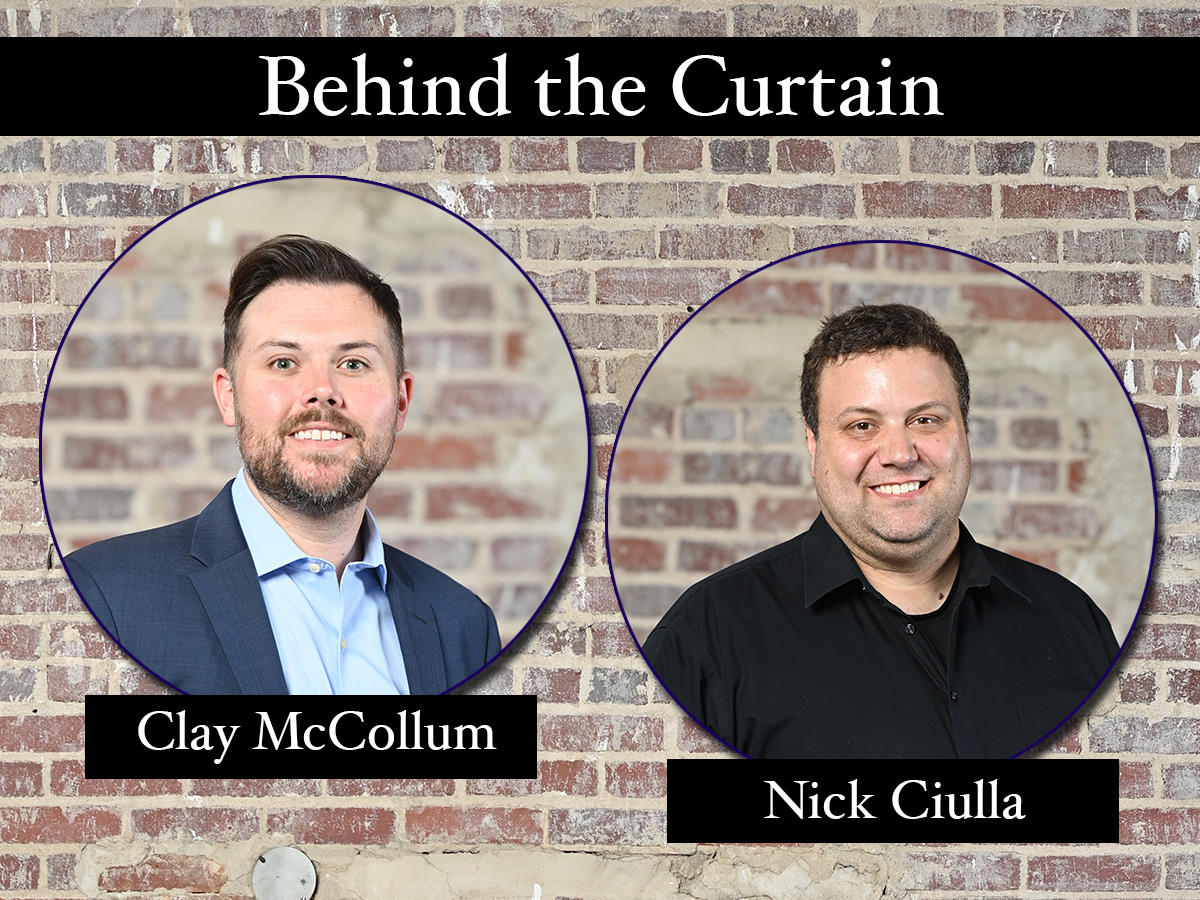
An interview with Clay A. McCollum, Director of Artistic Administration, and Nick Ciulla, Personnel Manager and Acting Principal Trumpet
Every time the Alabama Symphony Orchestra takes the stage, audiences experience the culmination of countless behind-the-scenes decisions. Who plays which instrument? How do we find musicians when our full-time players are unavailable? What happens when a soloist cancels at the last minute?
Two key figures orchestrate these critical details: Clay McCollum, the ASO’s Director of Artistic Administration, and Nick Ciulla, the orchestra’s Personnel Manager, who also serves as acting principal trumpet. Together, they navigate the complex world of hiring musicians, managing personnel, and ensuring that every concert features world-class artistry.
Clay joined the orchestra in 2021, bringing his background as a trained singer and musicologist to the role of selecting soloists who perform concertos and featured vocal works. Nick, now in his 11th season as a player and second full season as Personnel Manager, handles the intricate task of hiring substitute and extra musicians needed to complete the roster for each performance—typically 10 to 30 additional players per week.
In this candid conversation conducted in October 2025, Clay and Nick share their perspectives on what it takes to build an orchestra, the challenges facing musicians today, and behind-the-scenes stories from their work with the ASO.
Getting to Know Our Guests
Can you tell us about your backgrounds and how you came to the Alabama Symphony Orchestra?

Clay McCollum: I’ve been with the orchestra since 2021, joining as the pandemic was starting to ease. I’ve lived in Birmingham since 2014. I attended Ole Miss, where I double-majored in modern languages—French and German—and earned a Bachelor of Music in voice. After spending time in New York for graduate study, I returned to Alabama to continue my education in Tuscaloosa.
By the time I was 25 or 26, I realized I wasn’t going to be singing at the Metropolitan Opera, and teaching 18 hours of studio voice a week for 40 years sounded unsustainable. I went back to school at the University of Alabama in Tuscaloosa—Roll Tide—on an assistantship, where I taught sections of music appreciation while completing my master’s degree in musicology. That’s how I ended up in Alabama, and now I’m in Birmingham working with the orchestra.
Nick Ciulla: I’m in my 11th season as a player. I started in 2015 as assistant principal trumpet, and I’m now in my second full season as orchestra personnel manager, handling both roles.
Before coming to Alabama, my wife and I were at Florida State working on our Doctor of Musical Arts degrees. My wife finished her degree, and I’m nearly done with mine through the University of Alabama. I earned my Bachelor of Performance at Baldwin Wallace University and my master’s in trumpet performance at Wichita State University, where I also served as second trumpet with the Wichita Symphony Orchestra.
I won my audition here in 2015, which brought me to Alabama. Before moving into administration, I was very active on musicians’ committees, serving on the orchestra committee, the local union board, and for a time as a representative on the board of directors. I believe my experiences as a player and committee member give me a strong foundation for overseeing orchestra personnel.
Understanding the Roles
Can you explain what each of you does and how your roles differ?
Clay: I work with the conducting staff to select and hire soloists—the featured artists who perform concertos or vocal works with the orchestra. When we present a piano or violin concerto, for example, I help identify and hire the soloist in collaboration with our Music Director, Carlos Izcaray, and the conductor for the program.

Since Carlos enjoys working with vocalists and I’m a vocalist with opera experience, that collaboration is especially rewarding. When we perform Beethoven’s Ninth Symphony, which requires a solo vocal quartet in the fourth and final movement, I work closely with Carlos to select the singers.
Nick: I handle the instrumentation that supplements our existing orchestra based on repertoire requirements every time the Alabama Symphony Orchestra takes the stage. The ASO currently has 50 full-time musicians under contract. Each week we perform, I hire an average of 10 to 30 substitute or extra players to complete the ensemble.
Extra players are needed when a piece calls for more musicians than we have on staff. For example, during a Harry Potter concert—one of the largest orchestral programs we assemble—we may need 10 second violinists, but only have five on staff. A substitute player fills in when a full-time musician is unable to perform due to vacancy, illness, or leave. That’s why you may see different musicians on stage from concert to concert.
The Hiring Process: Building the Orchestra
Do you maintain a directory of musicians who regularly play with the ASO?
Nick: Yes, I have an extensive list of substitute players. When selecting qualified players, our criteria generally include recommendations from principal players or the music director, or a review of submitted resumes and recordings.
Often, we give someone a chance to play in a less demanding setting first—such as a brewery or pops concert. If that goes well, we may bring them in for a masterworks program.
Clay: Each program varies depending on the repertoire and level of virtuosity required. The demands of a masterworks concert can be quite different from those of a young people’s concert, which serves as an introduction to the orchestra.
Geographically, how far would you consider hiring someone?
Nick: We hire players from all over the country, not just locally. We offer subsidies that may include airfare assistance, per diem, mileage reimbursement, and a modest housing allowance. We’re also fortunate to have a donor housing program coordinated through Liz Saunders, which provides no-cost housing for visiting musicians.
We work with a wide range of players, including retired ASO musicians, local players from across Alabama, musicians from nearby states, and others who travel in from farther away.
Are substitute players given auditions?
Nick: Not in the traditional sense, but they are carefully evaluated. Often, an ASO member has played with them before, and hiring decisions are made collaboratively between the principal player and me.
Hiring Soloists
How far ahead do you hire soloists?
Clay: Typically, I plan 18 to 24 months in advance. By this point in the season, most soloists for the current year are booked, and I’m well into planning for the following season. During the summer, I often work three seasons ahead.
What are your criteria for selecting soloists?
Clay: My role is to support the conductor’s artistic vision. Once the repertoire is chosen, the conductor and I discuss potential soloists.
For example, when we programmed Liszt’s Second Piano Concerto for the 2025–26 season, Carlos recalled Llewellyn Sanchez-Werner from a previous performance. He was an excellent fit, and we invited him to return.
“Auditions are blind and highly competitive.”
The Audition Process
How do you maintain such a high level of quality in the orchestra?
Nick: It comes down to our audition and tenure process and the standards our musicians uphold. Auditions are blind and highly competitive, with candidates preparing numerous orchestral excerpts. Successful auditions lead into a tenure process that spans 18 months.
Not everyone receives tenure. Some are offered extensions, and others move on. The process includes regular performance reviews with detailed feedback.
The Reality of a Music Career
How common is it for musicians to hold administrative roles?
Nick: It’s challenging for musicians to rely on a single income source. Taking on an administrative role allowed me to stay closer to Birmingham and contribute in a different way while continuing to perform.
Clay: It’s fairly common for orchestra personnel managers to be musicians themselves. That shared experience builds trust and communication.
“Most players will take between 20 and 30 auditions before they win a job.”
Behind-the-Scenes Stories
Has anyone ever had a last-minute crisis?
Nick: Being late is extremely rare in this profession. Most issues arise well in advance, which gives us time to respond.
Clay: I’ve only had one soloist withdraw close to a concert. In May 2022, during a performance of Beethoven’s Ninth Symphony, we were able to secure a replacement on short notice because it’s standard repertoire.
Looking Ahead
Why haven’t we seen many guest conductors recently?
Clay: Since we have three talented staff conductors, we’ve chosen to focus on them this season and allocate resources elsewhere. We do plan to bring in guest conductors for select masterworks programs in future seasons.
How You Can Help
Anna Newsome, VP of Development: As a non-profit organization, the Alabama Symphony Orchestra relies on ticket sales and philanthropic support. The orchestra employs about 70 people—50 on stage and roughly 20 in administrative roles. Community support makes our work possible.
The Alabama Symphony Orchestra thanks Clay McCollum and Nick Ciulla for sharing their insights into the work that brings each performance to life every time the Alabama Symphony Orchestra takes the stage . To learn more about supporting the ASO or attending upcoming concerts, visit alabamasymphony.org.
Behind the Brass: How Alabama Symphony Orchestra Musicians Shape Sound Through Art and Engineering
.. time In a previous blog post, writer Nicky Swett heard from ASO string players about their experiences searching for instruments. In this article, he speaks with Alabama Symphony Orchestra musicians about how they came to their wind and brass instruments.
The contrast between searching for brass instruments and string instruments
I began by asking Alabama Symphony Orchestra musician Masa Ohtake about how he found the trombone he plays on. He immediately formed a contrast between searching for a brass instrument and looking for string instruments. “I’ve had string playing friends go through finding a bow and how heartbreaking and excruciating and difficult and possibly financially destructive that process can be. The most expensive orchestral-style trombone you can buy is probably a type of German horn, which costs 10-15 thousand dollars.” Professional-grade string instruments, on the other hand, start in that range and can go up to hundreds of thousands, or even millions. “That’s a very different category of stress,” Masa exclaimed, though he acknowledged that the purchase of any high-level orchestral instrument is a substantial investment.
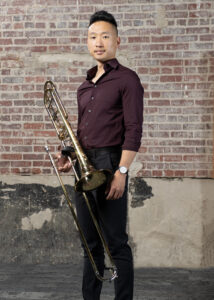
Brass instruments and some woodwind instruments are quite customizable. “This is just my opinion, but metal has less personality than other materials that are used in instrument making. The difference changing from metal to metal is not the same as from wood to wood,” Masa told me. Parts can be swapped for one another and adjusted with relative ease. This means that for wind and brass players, the search process often involves assembling a new instrument rather than finding one that is already out in the world, ready to go.
The search for the right instrument is still involved and demanding
That certainly doesn’t mean it’s necessarily a less involved and demanding process. “I tried more flutes than I could count,” flutist Tessa Vermeulen told me. “My time was spent trialling many different makers, emailing them, and asking if they could send me a couple with various specifications. I didn’t really feel a serious click with any of them until I tried Kanichi Nagahara flutes. My search immediately narrowed when I tried these. They have this vibrancy and immediacy of response that was really attractive. Nagahara flutes have the capacity for a lot of power. I don’t want to feel like the flute can’t quite take this amount of air, or it can’t do this extreme of a dynamic.”
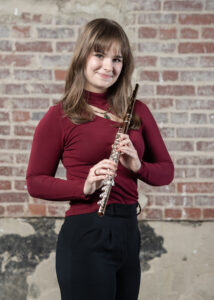
Because Tessa was planning to commission a newly-built flute, rather than buy a pre-made one, she had the chance to get things just right. “He made one body to my specifications, but I was debating between two head joints—the same material, but a very slightly different cut. He made two of them and he sent them both to me. It was very subtle, both of them were great, but I ended up picking one.”
I asked Tessa about what helped her to make that decision. “Head joints are the main element of the flute that determines the sound,” she explained. “It was about which specific cut was going to alter the direction of the air ever so slightly in a way that was going to feel more like my voice. The cut that would make me feel physically empowered to do whatever it is I want to do. One of them felt a little bit more direct in terms of where the air was hitting. Another was slightly more diffused. I ended up picking the one that was more direct, because it felt like throughout the various registers, and with different articulations and dynamics, I had the most control.”
The reality of the complexities of an instrument’s limits
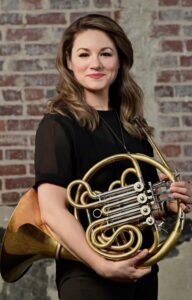
Principal Horn Valerie Sly wound up with her french horn after a long and sometimes frustrating string of these kinds of back-and-forth modifications on another horn. “I had been sending the horn that I had been playing on to this horn maker named Jacob Medlin. We had been trying to fix a couple little things in the instrument that weren’t working very well. At a certain point, he was like ‘I don’t think we’re going to be able to get some of these problems worked out the way that you want. We’ve kind of hit the upper ceiling of what this instrument can be.’”
She explained that horns are extremely sensitive instruments and that even great makers sometimes can’t fully explain why certain notes work well and others don’t. “The way that I would describe what it feels like to find notes on the horn is a little bit like throwing darts. The wiggle room that you have on each note is different.
“When you’re in the low register, you’re trying to throw a dart at the bullseye, but the bullseye is big and you’re like five feet away from it. It’s not that bad. As you get up into the higher register, you’re taking steps backward, and your margin for error becomes much smaller. But there can be certain notes where, for whatever reason, the way the instrument is vibrating, it feels like the bullseye is non-existent! There’s no stability to the note. You’re trying to balance a pencil by the eraser or the point.
Even the best horn builders in the world don’t totally know everything
“Even the best horn builders in the world don’t totally know how this works from a physics standpoint, because the way that the sound waves move through brass instruments is so complicated. On my old instrument, a couple of notes in the high register were what I would refer to as very squirrely! The horn just like didn’t want to snap into place on them – it felt like the slot was non-existent.”
Jacob, the horn maker she was working with, suggested that he could get further with a different instrument. “He suggested that it would actually be better to take a Yamaha, which are horns that horn makers love to work on because they’re very consistent, and do a bunch of tweaks to it. He knew what the outcome would be.” Fortuitously, Valerie’s backup instrument happened to be the exact Yamaha model he suggested, and so she quickly shipped it his way. “It has a whole new bell that’s his, a whole new lead pipe that’s his. There’s a ton of work to the body of the horn. It’s sort of half Yamaha and half his. He sent it back to me and I really did not know what to expect. I played on it and it was amazing. I never went back to my other horn!”
The timing of “The Search” is unpredictable
The musicians I spoke with all initiated instrument searches at different stages in their careers. Masa, for his part, was adamant that it is important not to look for an upgrade too early on. “I think it’s generally good practice when you’re young and developing not to look outwards for solutions but to look inwards. Become a better producer of sound before we start to think, ‘if I change this about the instrument, it’ll make me better.’
“I see a lot of students spend a lot of money changing stuff out every semester. If you have the resources, great. But if you don’t, really make sure that you have all the fundamentals in place. Get to the point where you know the way that you want to present your sound, what you need from a trombone in an orchestra job, and what you need to fit in the section. That kind of clear picture is what navigated me toward my instrument. It’s like buying clothes. You don’t want to buy the nicest designer things if you know you’re going to grow 6 inches in the next year!”
Know the goal and have a target in mind before starting the process
Masa decided to get a new instrument shortly after he won his job in the ASO, and once he started the process, he really enjoyed working with a trombone maker in Boston. “They do fittings for you, these instrument makers. They have hundreds of different trombone slides! For different components, you can get rose brass, yellow brass, gold brass, nickel, sterling, and silver. It’s interesting. I’m glad I went through it. I know a little bit more now, I feel better equipped to talk about it, but I felt very lucky to know what I was going for and have a target in mind before I started the process.”
Tessa also noted the importance of really knowing her own sound. She brought that knowledge to the decision-making process for possible flute configurations. “The more diffuse head joint had some specific [tonal] colors that I liked. One or two colors were slightly more difficult to achieve on the one I ended up choosing. But I decided I wanted something that would give me a super-solid base. I can now make my own colors on top of it. As soon as an instrument is imposing some sort of color or condition on your playing across the board, it’s taking your options down a notch.”
I was struck by the difference between this mentality and that of string players I have spoken with about their instrument searches. They expected that the violin or cello they chose would have its own inherent sound that would force them to adjust their playing style in various ways. Perhaps the potential for customization in wind and brass instruments also creates a different set of expectations. All scenarios create a unique relationship between the player and the instrument. “I believe the best instrument is a blank slate,” Tessa proposed. “That’s how you know that you found the right instrument for you: if it’s physically comfortable and if it feels like a blank canvas.”
Behind the Strings: How Alabama Symphony Orchestra Musicians Find Their Perfect Instruments
.
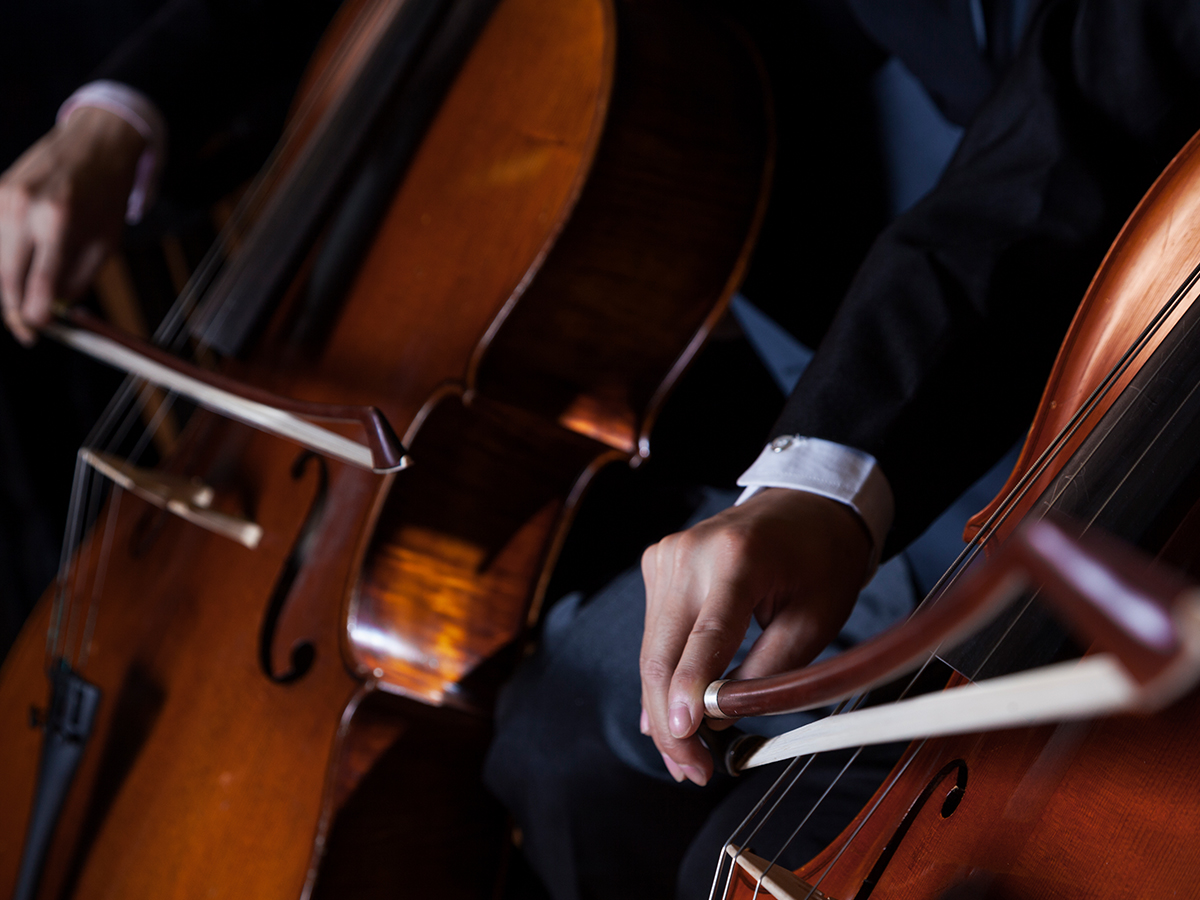
Cellist, writer, and musicologist Nicky Swett speaks with Alabama Symphony Orchestra musicians Lauren Peacock and Boyu Li about how they came to the string instruments they play on.
The transition from early beginnings to “The Search”
Many string players have little memory of the very first instruments they used. “I started on violin when I was three. I think I had one of those cardboard violins,” Lauren Peacock, Assistant Principal Cellist of the Alabama Symphony, told me. “When I was five, I asked to switch to cello. I don’t think I had a cardboard cello, but I had one of those little baby wooden ones that probably didn’t sound too good.” As kids get older, they often go from instrument to instrument without having much input about what they are playing on. “When you’re really young or in high school, you don’t know exactly what to look for. Your teacher often helps you find the instrument,” Lauren explained.

At a certain point, performers who have decided to play professionally begin thinking more actively about the tool they bring on stage every day, and they look for something that can take their playing to a different level. This can happen at various career stages. Lauren began seeking a cello after she had completed her master’s degree, while she was playing in The Orchestra Now, a training orchestra in upstate New York. “It was the first time I searched for a cello after developing my ear in college. When you look for an instrument at that stage, you have wants of your own: your sound, the colors that you are going for, a sense of what feels right to you. Looking for an instrument is a scary, long, but special process to go through.”
“The Search” is a long, challenging process
At times, the search can be daunting. “There are so many options out there, it can be overwhelming. Your ears get tired after a while!” Lauren admitted. “You have to take a break. Kind of like if you smell too many fragrances, it just gets confusing.” She mentioned that it was helpful to have friends who were looking at the same time. “One friend and I went to Boston together, and we would play for each other, which was really helpful. The shop that I got my instrument from, Carriage House, has a little recital hall. They would bring 10 or so cellos in, and my friend and I would play them for each other and get instant feedback from each other.”
Professional-grade string instruments range in price from $10,000 to millions of dollars. While the people running shops are often very generous and helpful, there are high stakes around every purchase. “They’re trying to sell you something—that’s their job,” Lauren acknowledged. The key is to demonstrate the instrument in different contexts for as many colleagues and mentors as you can before committing.
“The instrument often sounds very different under your ear than it does far away. Is the instrument bright or dark? Is it loud or soft? Does it have a lot of core to the sound? You have to play for people in a big hall to know that what you’re hearing is getting translated out into the audience.” After a search of about six months, she settled on a modern instrument by a New Haven-based maker named Lawrence Wilke. “There were a lot of colors and sounds that I hadn’t been able to access on my previous instrument, and that really drew me to it.”
Each musician has their own journey in “The Search”
Boyu Li, Associate Concertmaster of the Alabama Symphony Orchestra musicians, had quite a different experience coming to his current instrument. He first recognized that he needed to use a new violin back before he applied for graduate school. “One time, I borrowed a violin during my auditions for Master’s. I went to the Fine Arts Building in Chicago to a shop with very nice violins. I just talked to someone and said ‘I’m auditioning for a good school and I really want to get in.’” They gave him a good instrument for a month, but he had to return it when he finished his auditions.
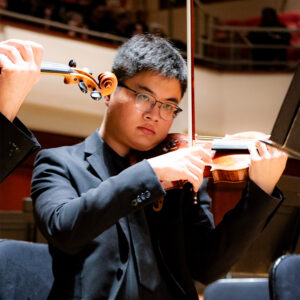
He began looking for a violin to use long-term more recently, while he was studying for his Doctor of Musical Arts degree at Boston University. “I started taking orchestra auditions, and the instrument I had was really bad. I don’t think that instrument was going to help me to win a job.” He started his process by looking for a sponsor who would either lend him an instrument or help him to pay for one. “There are a lot of foundations out there if you don’t have a personal connection. You can send your resume and recordings. If you can win a competition, that’s even better,” he explained.
Sometimes the journey of “The Search” provides great insight
Boyu was fortunate enough to connect with Mr. Zhou, a private sponsor based in Boston, who offered him a loan of an 1808 violin by Nicolas Lupot, an esteemed French luthier (the official term for a string instrument maker). “When I met Mr. Zhou, he actually had two violins available,” he told me. “The Lupot, which is quite valuable, and then also a violin by Giuseppe ‘del Gesù’ Guarneri, which is worth like $1,000,000! I tried the Guarneri first. But when I tried to play it, and I know it wasn’t my fault—it didn’t sound as good.
“From that point on, I knew that the price tag didn’t always track with what musicians want. It means a lot to the dealer or at the auction. But for the musicians, you can find the personality of the instrument right away and know if it’s the sound that are looking for. The Lupot had a lot of warmth. A lot of essence in the sound. I knew it was a great violin. Still, it wasn’t a very easy violin to play at first because the bridge was high, which meant the distance between the string and the fingerboard was large and it’s more work to put your finger down.”
The result of “The Search” might be a surprise
Boyu discussed the palpable effects this instrument has had on his approach to playing. “Having an old violin is a learning process. I used to play in a way that was pretty tight and not comfortable. These old instruments can teach you a lot of things because there are only one or two ways that you can make the instrument sound really good. I learned a lot about how I’m playing, and I started trying to be more relaxed to bring out the instrument’s natural sound rather than the sound I want to put on it. You have to adapt to the instrument. It has its own voice.”
Lauren had a similar experience, subtly shifting her playing in response to the instrument she chose. The shape of her cello is modelled on instruments by Matteo Goffriller, a 17th – and 18th-century Venetian luthier. Gofriller-style cellos have relatively large bodies, which can take some adjusting when you start playing them. “I had to learn to relax a lot more,” she explained. “I couldn’t muscle the sound out! You’ve got to let your gravity—your natural arm weight—get the most beautiful tone from the instrument.”
Though the search process can be intense and stressful at times, the instruments themselves can take some getting used to. The reward is often a lifelong musical companion. For Boyu, there was a close connection straight away: “I knew immediately when I started playing the Lupot, from the first note, that it was the right one.” As Lauren said of her cello with a smile and a laugh, “It’s a big, big friend.”
–Nicky Swett, cellist, writer, and musicologist, 2025

Honoring a Loyal Veteran: Retired Master Sergeant George Coward and the Alabama Symphony Orchestra
The Alabama Symphony Orchestra (ASO) community honors our veterans for their vital contributions to defending our freedom. We can genuinely honor veterans by deepening our understanding of their experiences and supporting them in meaningful ways that address their needs and challenges. Here, we say “thank you for your service” with this feature about one veteran, as we follow one of our core missions, which is to connect people through the power of live symphonic music in Birmingham, creating shared experiences that uplift and unite.

Whenever you attend a Coffee Concert at UAB’s Alys Stephens Center, you might spot Retired Master Sergeant George Coward, a familiar face in the audience. Having served for an impressive 39 years, Sgt. Coward built his career in Global Logistics for the U.S. Army, ensuring the smooth movement of supplies and equipment across the world—a mission that kept operations running for combatant commands everywhere.
Enlisting in 1964, Coward served in Central America, Germany, Japan, and across the United States. Out of respect for each culture, he learned German, French, Japanese, and Spanish. He describes his time in the Army as “a most gratifying experience.” Reflecting on his role at a missile site, he recalls “successfully moving equipment around the world—especially using the Army’s supply ships.” With a grin, he adds, “The Army has more ships than the Navy.”
Now retired, Coward enjoys attending the ASO Coffee Concert Series and often visits other events such as the New Year’s Eve Concert. He always attends with his dear friend Linda Pearce, whom he met at church. They love the music, the friendships, and the warmth of the ASO community. “They are a real pleasure, and I even get hugs,” he says—proof that the orchestra’s concerts truly create a sense of belonging.
Music has always been a part of Coward’s life. As a child, he admired Victor Borge for his humor and piano artistry. Today, he finds that same joy at the ASO’s holiday and pops performances led by conductor Christopher Confessore. His favorite pieces include Beethoven’s Moonlight Sonata and Tchaikovsky’s 1812 Overture, both staples of the classical concert repertoire.

Pearce shares his enthusiasm: “The Alabama Symphony Orchestra brings musical experiences to all groups, especially the elderly,” she says. Together, they even recall a pianist from the Philippines who once performed with ASO and whom they hope to see return as a featured soloist.
As Coward beautifully puts it, “Life is fulfilling, and it is a pleasure to be alive. Sometimes it is difficult to get old, but when you hear music, you are made to feel good. People—staff, volunteers, and musicians—go the extra mile here.”
By Mary Yakimowski, ASO Patron Experience Volunteer, 2024/2025 and 2025/2026
Read more articles by ASO and other contributors here.
Behind the Music: Insider Scoop on Producing “South Pacific” in Concert with the ASO
From the desk of Clay A. McCollum, ASO’s Director of Artistic Administration
When I’m asked, “Hey, Clay, what are you most excited for in the 2025-2026 season?” my immediate reaction is this: “I’m excited that the orchestra is producing Rodgers and Hammerstein’s South Pacific in concert in January 2026.”
Hi, I’m Clay McCollum, ASO’s Director of Artistic Administration. As some already know, my background is in classical music, but my main experience comes from regional opera. Producing this type of performance with the ASO is exciting because I’m bringing my expertise to ASO in a whole new way, not only for the 2025-26 season but also for 2026-27. Specifically, the orchestra will produce a semi-staged Golden Age musical, Rodgers and Hammerstein’s South Pacific, in January 2026, followed by the world premiere of a new chamber opera by Alabama composer Joseph Landers in April 2027. Jody’s opera will be called Pink Clouds, with celebrity journalist and Alabamian John Archibald having written the libretto.
These concert productions of large, non-choral vocal works have historically been part of ASO’s tradition. Our most recent such concert was over ten years ago, and I hope to revive these performances regularly—ideally annually—or as close to that as practical. In November 2014, ASO staged Humperdinck’s Hansel and Gretel under the baton of Music Director Laureate Justin Brown (our Music Director at the time): Dane Peterson from UAB’s ArtPlay directed the production.
“Offering semi-staged concert productions at UAB’s Alys Stephens Center will provide an experience for patrons that ASO hasn’t mounted in more than a dozen years,” says Principal POPS Conductor Chris Confessore. “Clay has been invaluable as we work to bring South Pacific to the stage! He and I have been working on this off-and-on since summer 2023, and January can’t get here soon enough!”
In preparing for these performances on January 16 and 17, 2026, Chris and I are joined by veteran stage director Stacy Alley (Area Head of Musical Theatre at UA, Tuscaloosa) and Kelly Allison (Department Chair of Theatre at UAB) as we each take on our own “roles” in bringing South Pacific to life. This summer, you may have seen Stacy’s (director) Big River at Virginia Samford Theatre.
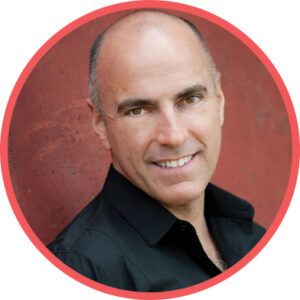

Some of you may be aware that Carnegie Hall mounted a similar South Pacific concert featuring Reba McEntire and Alec Baldwin. ASO’s performances will feature William Michals as French expatriate Emile de Becque and Birmingham local Kristen Campbell as Navy-enlisted nurse Nellie Forbush. Michals is perhaps best known for previously playing de Becque in Lincoln Center Theater’s most recent Broadway revival in the middle-2000s. That production was directed by Bartlett Sher and garnered multiple-Tony® Awards.
How lucky are we to bring William Michals to Birmingham to explore this timeless story and its poignant magic and heartache and redemption in a new way with you, our audiences! I saw LCT’s production, and we are truly in for two remarkable evenings of theatre. Kristen Campbell was seen this summer in July and August in Sara Bareilles’ Waitress with our friends at Red Mountain Theatre Company. She played zany best friend Dawn Pinkett. Coming off Dawn, it’ll be awesome to see Kristen step into a totally different character in the love-interest protagonist ingenue (Nellie in ASO’s South Pacific).


Tuscaloosa-based mezzo-soprano Dr. Alexis Davis-Hazell and local celebrity artist Caleb Clark complete our production’s main cast. Alexis, who recently appeared in our latest Birmingham Does Broadway! (February 2025), will portray the fearless Bloody Mary. We are excited to continue working with Alexis in January! She will also perform for ASO audiences in October 2025 and October 2026, appearing in Beethoven’s Ninth Symphony and Giuseppe Verdi’s Requiem, respectively. Creating complex characters such as Bruce in Fun Home and George in Sunday in the Park with George, Caleb is also a noted Birmingham artist who works in various mediums, focusing on portraiture and figure. Check Caleb out on Instagram, @calebclarkartist. He has been a regular part of our Birmingham Does Broadway! series, and he helped us close the 2024-25 season as a featured soloist in the Summer Symphony series.

If you have any follow-up questions about ASO’s January 2026 South Pacific, feel free to send me an email: Clay A. McCollum (Director of Artistic Administration), cmccollum@alabamasymphony.org. I would love to hear from you, and I look forward to seeing you in the theatre!
Get tickets to see this amazing production now! Click here.
Reflections on a season volunteering with the Alabama Symphony Orchestra
Music has always meant a great deal to me, as it does to many of us. I believe it is hardwired into us to some degree. That is how people who have never played an instrument may have a sense of rhythm or harmony. I played trumpet and baritone throughout my school years, but like many, I fell out of practice and stopped playing not long afterwards. Over the ensuing years, I did miss the inspiration from dozens of musicians collaborating to create. It was with that in mind that I volunteered with the Alabama Symphony Orchestra’s Patron Experience program for the 2024-2025 season.
The Alys Stephens Center on the University of Alabama at Birmingham’s campus is the home venue for the symphony, and it is a lovely facility. Throughout the season, the Masterworks program was performed there, along with additional works, often featuring notable guests from throughout the music community. The symphony celebrated 10 years under the direction of Carlos Izcaray during the season. Handel’s Messiah carried on as a popular tradition, and it was great to see the community come out to celebrate the season with the venue all decked out for the holidays. The symphony performed compositions by local composer Dr. Brian Nabors and, towards the end of the season, accompanied Alabama folk artists The Secret Sisters. As a volunteer, I had an incredible vantage point for so many inspirational performances.
ASO added events at The Carver Theater for the 2024-2025 season, and I was able to attend all of them. Carver is home to the Alabama Jazz Hall of Fame and features a more intimate auditorium that can still accommodate a mid-sized ensemble.
Concertmaster Daniel Szasz programmed an excellent series during the season at Brock Recital Hall on Samford University’s campus. This is another great facility for performance. From a volunteer perspective, it is open seating, and concerts are approximately an hour long, so it is a slightly different experience., You get to appreciate the individual musicality when there are only two or three musicians, which provides a nice contrast to concerts featuring the whole orchestra.
I was able to volunteer at one of the season’s educational events, also on Samford University’s campus. This helped me understand even more what a tremendous asset ASO is to our local arts community. World-class musicians can inspire students from our public schools. I was also able to volunteer for one of the season’s Tunes on Tap events, which offer free performances at various local brew pubs for audiences who may have never had the opportunity to hear the symphony.
The season began with a performance at the Botanical Gardens. It concluded with the traditional Memorial Day Weekend performances at Birmingham’s Railroad Park, which always draws a large crowd to the city. The SuperPops! performances at the BJCC are always fun for casual musical fans, giving them the opportunity to enjoy the symphony from the perspective of popular music and music from their favorite movies or musicals.
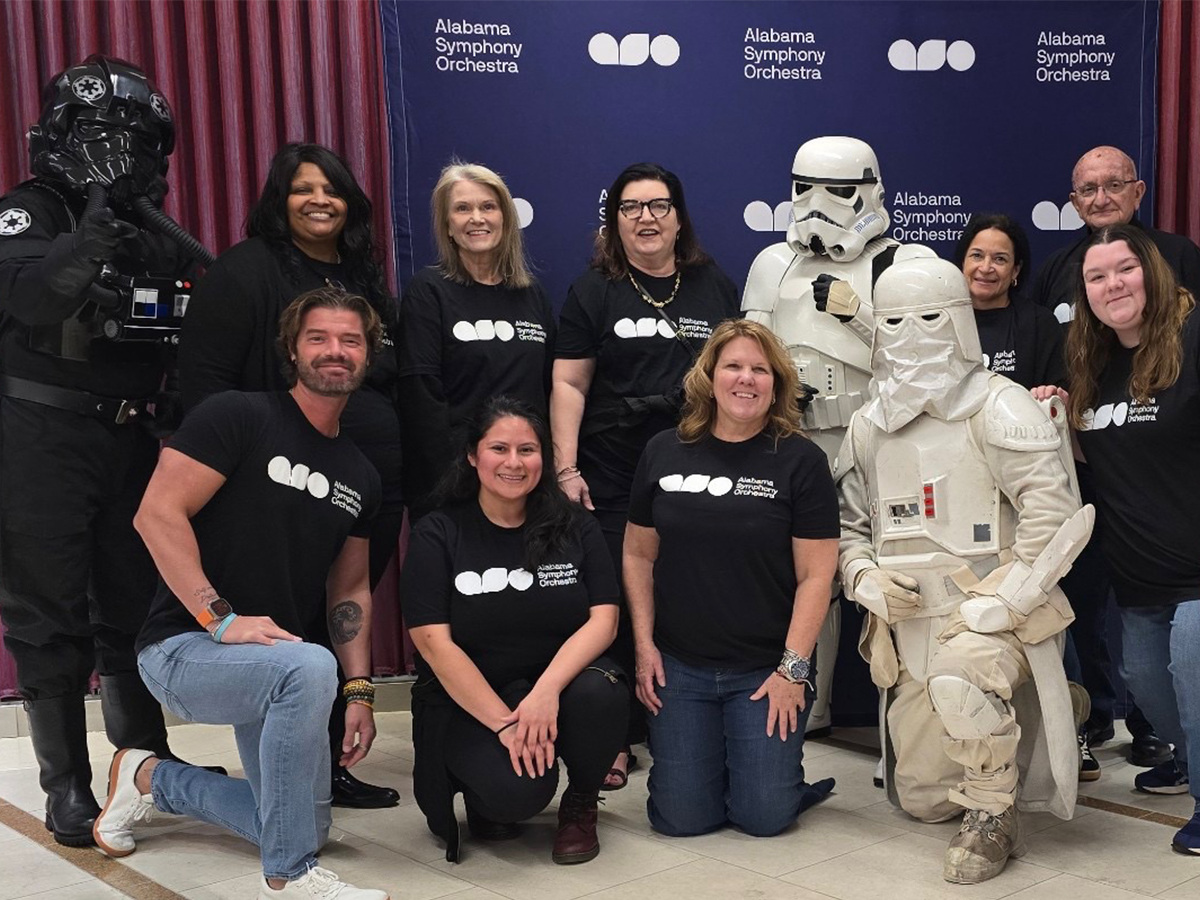
Those were the experiences of the music. As a volunteer, I had the opportunity to meet several like-minded music lovers and individuals who are passionate about contributing to something bigger than themselves. For some performances, I held the door as people walked in. For others, I scanned their tickets. Some people get dressed up, so I might take their photo with their cell phone. Or I might help them find their seat. I may not be able to play music at the level of the orchestra members. Still, I hope I was able to play a small role in providing that experience to members of my community and making it an enjoyable one.
So that was my season volunteering with the Alabama Symphony Orchestra. They offer diverse programming at different venues so that everyone can find something they might enjoy. I enjoyed the musicianship enough to become a subscriber for the next season myself. It was a tremendous blessing to me, exceeding any expectations I might have had at the beginning of the season. However, I also intend to continue volunteering so that others may have the same experience. I invite you to join me as a volunteer and patron!
-Billy Sanford, ASO Patron Experience Volunteer, 2024/2025 and 2025/2026
Read more articles by ASO and other contributors here.
A Grand Pause: Passing the summer with ASO musicians
In a new series of Alabama Symphony blog posts, cellist, writer, and musicologist Nicky Swett interviews ASO musicians about their summer activities.

On May 25, 2025, the Alabama Symphony Orchestra rounded out the 2024-25 season with the rousing fanfare at the beloved annual free concert series “Symphony in the Summer” at Birmingham’s Railroad Park. The musicians don’t start rehearsals for the first concert of 2025-26 until the end of September. Four months might seem like a long pause, but musicians are never really off the clock. “It’s quite a long break,” assistant principal flutist Tessa Vermeulen said to me when we spoke earlier in the summer. “What always ends up happening to me is that I think I’m going to have all this free time, and then I fill it with a bunch of stuff and end up being really busy.”
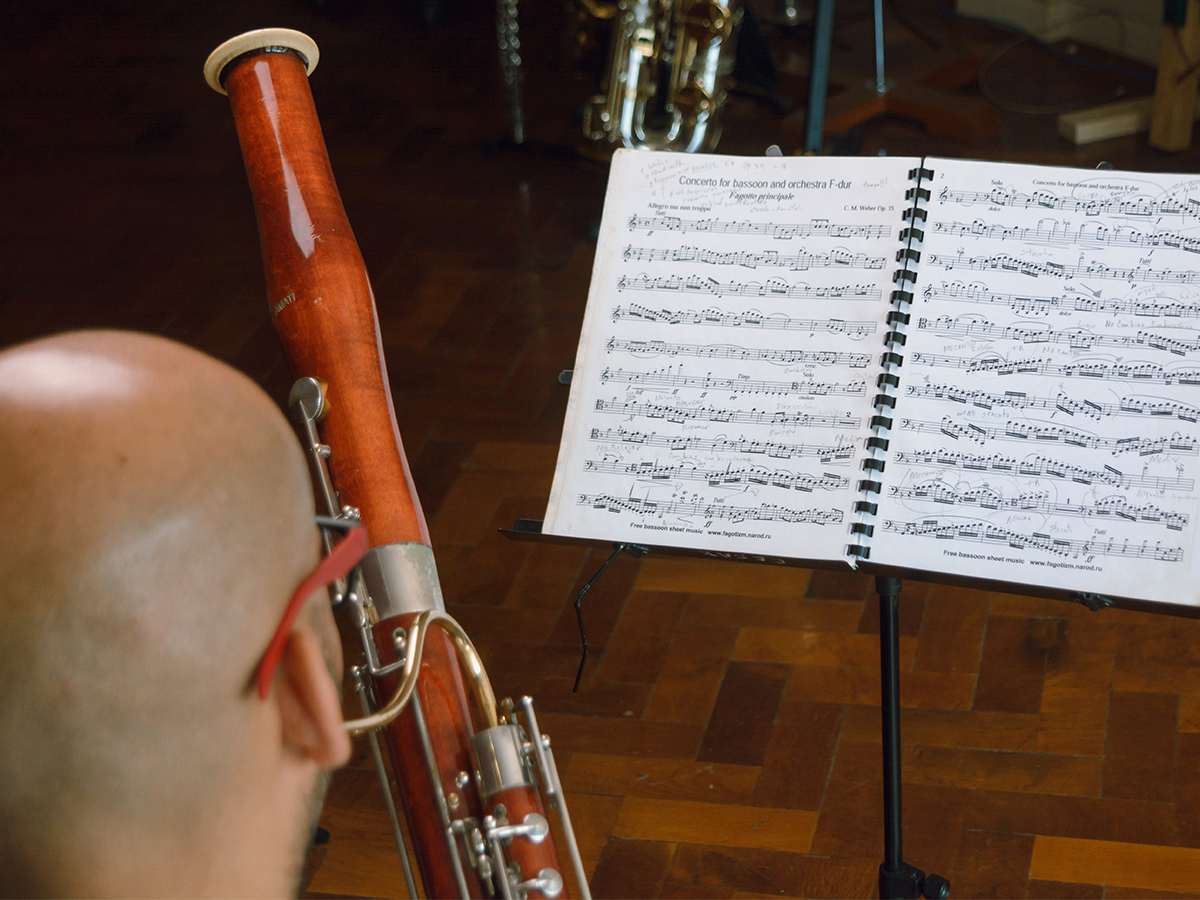
She spent the first half of the break preparing for a solo recital in Chicago at the end of July, part of the Dame Myra Hess Memorial Concert Series. “They let me pick whatever program I wanted, 40 minutes of my favourite music,” she told me. It included pieces by Tchaikovsky, Samuel Barber, Robert Schumann, and also a sonata that she commissioned from a friend and colleague from Juilliard, Colby Kleven. She presented this last piece again in August at the conference of the National Flute Association in Atlanta—“The biggest gathering of flute nerds in the world” as she put it. “There are performances, panels, and master classes covering everything about playing and professional development. It’s a great chance to try instruments, because they’ll have a huge area where all the flute makers are represented. It’s also an opportunity to network with various flutists. At the end of the convention, they have a gala performance, where they bring in some of the most high-profile professionals from around the world to play with an orchestra.”
For Boyu Li, who joined the symphony as associate concertmaster in January, this was a relatively laid-back summer. “Usually, I have a lot of things to do in the summer—I go to festivals, or I head back to my home country.” He told me that since he was transitioning from a student visa to a work visa, he mostly used the time to study for upcoming exams at Boston University, where is finishing up a Doctor of Musical Arts degree, and to settle into life in Birmingham. “I’m trying to work on my driver’s license,” he explained. “I have lived in the States for 10 years and it never came to my mind that I would need to know how to drive! Now I need a car to go to work.”
I shared with Boyu that I had to take the road test three times before finally getting my license. “People always say it’s so easy to get a driver’s license here,” he commiserated, “but I failed the first time because of a very stupid mistake! The judge wanted me to show her the lights. She said to turn on the ‘emergency light.’ I was like, ‘What does that mean? Do you want the emergency brake or the hazard light?’ She didn’t really say yes or no, just kept saying ‘emergency light.’ It was off to a bad start, so even though we went through the rest of the test, I think that was the reason I didn’t pass. But it doesn’t matter! I will make another appointment to take the test again.

All the musicians I spoke with mentioned that they enjoyed having more practice time during the summer break. Trombonist Masa Ohtake described how “when you don’t have a whole lot of high stakes responsibilities with your playing—like next week I have to perform this symphony or that recital—you can isolate your weaknesses and spend time working through problems. I’ve been going back to basics and taking care of some loose ends in my playing that I have neglected the last three years or so.”
I asked Masa what specifically he was working on in his playing during this period. “Very nerdy, trombone things like control in a specific register of the horn,” he answered. “I am going back through some solo pieces that I haven’t played in a while. We’re not required to do much of that in the orchestra, but I want to make sure that I’m still pushing my technique outside of what’s required on a regular basis.” He also mentioned devoting time to repertoire on the coming season—Ludwig van Beethoven’s Ninth Symphony and Aaron Copland’s Third Symphony both have major brass parts that need woodshedding.
In addition to practicing and preparing, Masa spent the summer doing some festival teaching and house hunting. But he told me he was very excited to get back to concerts with the ASO and his main teaching job, even though the season can get very intense and busy. “I think it’s because in a sense I don’t find it to be work,” he said in a reflective tone. “I get to do this crazy thing. Playing in an orchestra full time and also teaching kids how to be musicians and human beings—it’s insane. It’s the best.”
 Nicky Swett holds a PhD from the University of Cambridge. He works as a program annotator and editorial contributor for concert presenters across the US and UK, including the Chamber Music Society of Lincoln Center, the New York Philharmonic, the BBC, and Wigmore Hall.
Read more articles by ASO and other contributors here.
Behind the Scores: Meet the Orchestra Librarian
By Emma Kosht, Alabama Symphony Orchestra Librarian
The first piece of tonight’s program has just concluded, and Maestro has exited the stage. Without much ado, a person carrying a score (a book of music from which the conductor conducts) walks out onto the stage and steps onto the podium. You may be wondering who that person is and what they plan to do up there. Are they going to conduct the rest of the performance? Are they a lost musician? No, that would be the orchestra’s librarian; a role that is mostly unknown, but crucial to the orchestra’s performance. She places the score on Maestro’s stand and quickly walks off, allowing the performance to continue.

My name is Emma Kosht; I am the head librarian of the Alabama Symphony. Orchestra librarians are trained as classical musicians and apply those skills in their daily work as librarians. I attended the Cleveland Institute of Music, where I studied trumpet performance and began my studies in the Cleveland Orchestra’s library. One of the leading and crucial roles of the orchestra librarian is being able to put myself in the musicians’ shoes and decide what would work best from their perspective. You will not typically see orchestra librarians with degrees in library science; for this reason, we mainly function as musicians within the orchestra.
So, what does an orchestra librarian do? In short, we oversee all the music on the stage and in the orchestra’s collection. I oversee procuring, licensing, and cataloging all the orchestra’s sheet music, which is an enormous task for such a large ensemble. With our typical season featuring over 40 different programs, we prepare several thousand parts. In addition to this, I work on correcting parts, repairing damaged materials, addressing issues that may arise during rehearsals, and liaising with other staff members on hiring needs, as well as copyright issues related to the music itself and its performance. Aside from the music preparation part of my job, I also rent or purchase any music needed for a program from various publishers, conducting extensive research on specific editions and versions to ensure I acquire the best option for our orchestra. Orchestra librarians must also maintain a close relationship with the conductor of any given program to discuss any necessary changes or musical questions, as well as the actual music being used.
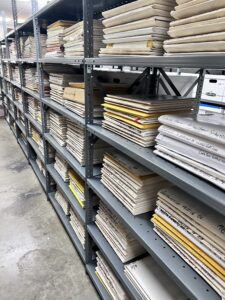
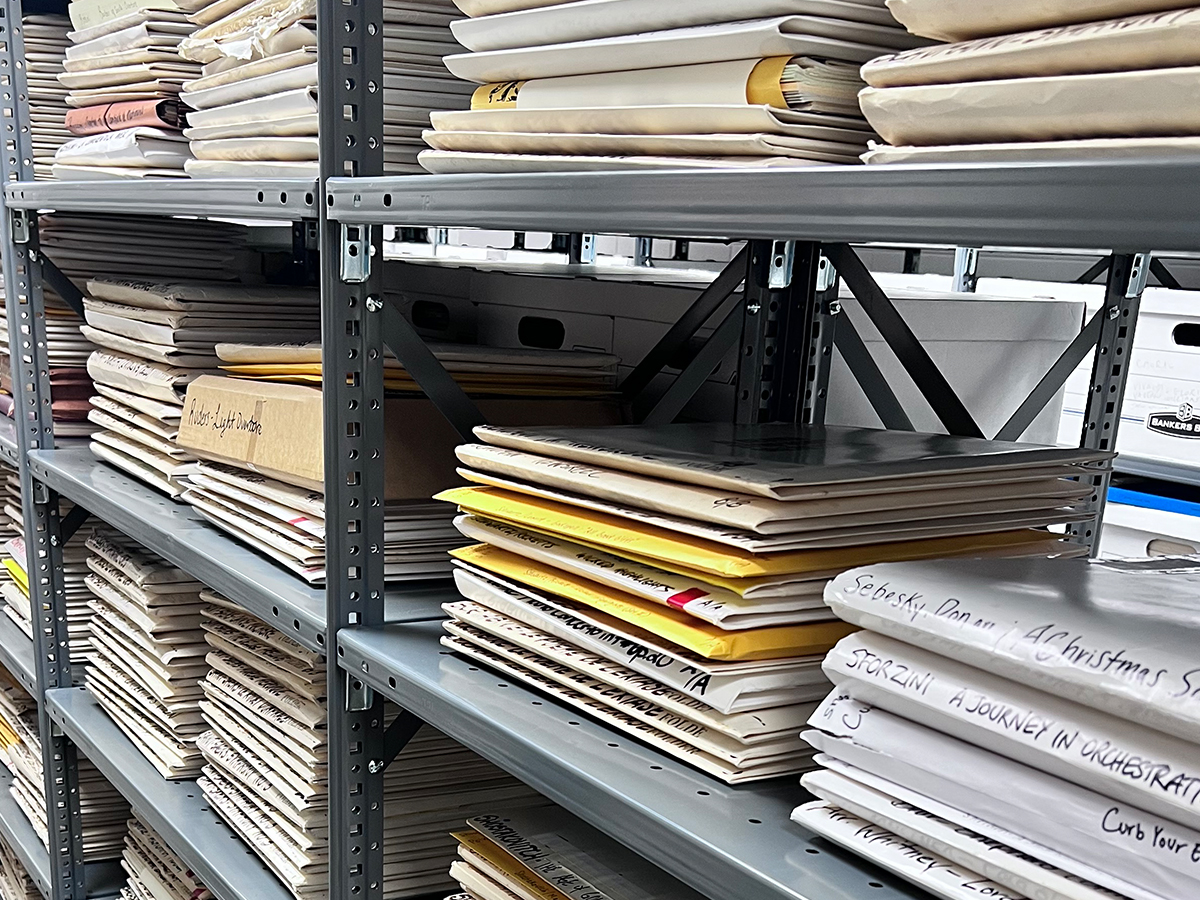
When the repertoire for a program is finalized, several steps in my preparation process begin months before the program is performed on stage. Firstly, I assess the pieces in the program and determine which ones we already have in our library. If there are any pieces that we do not own, I will either purchase them (if they are in the public domain) or rent them (if they are not in the public domain) from their respective publisher/music dealer. If we have some or all the pieces in our library, I will make a trip to our offsite library, which also functions as our music storage room, in the basement of the BJCC Concert Hall. Once all the pieces, whether new or already owned, are in my main library at the Alys Stephens Center, I will begin assessing what needs to be done to make this program performance-ready.
Firstly, I will provide the instrumentation needs for this program to the ASO’s Personnel Manager so that he can begin hiring any necessary musicians, and to our Stage Manager so that she can start planning the stage setup and how everything will fit. Depending on the amount of time before the music must be ready, I may thoroughly proof the parts (what the musicians play from) against the score (what the conductor conducts from), or may correct the music from an already compiled list of errors in the given work from my colleagues in other orchestras. To “proof” the parts means to check their correctness against a master copy (in this case, the score), just like an editor would edit a new edition of a book. This process is very rewarding once complete but can be an extremely lengthy and challenging task.
Following this, the “bowing” process begins. When you are watching the orchestra, you may notice how the string players’ bows all move in the same direction. The way the orchestra chooses to bow a passage is not by chance or luck; this is a carefully thought-out system that our principal string players decide. First, the music is given to the concertmaster, who writes all their desired “bowings” into the part using various symbols. Following the concertmaster, the music is then given to the principal 2nd violin, principal viola, and principal cello. All of them receive their respective parts, along with a copy of the 1st violin’s music. Once their bowings are complete, the last phase begins, with the music going to our principal bass, who receives their music along with a copy of the principal cello’s music. After the five musicians decide the bowings, the library transfers all those bowings into the respective section parts, and scans everything so that the section players may practice using those bowings prior to the first rehearsal. Next time you see the string’s bows moving in unison think of this process that occurs to make that moment happen.
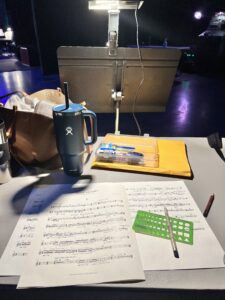
Aside from the parts being bowed, the next phase of preparation is inputting any needed cuts, inserts, edits or notes from the conductor into the parts, as well as fixing any parts that have rips or tears, any notes that are hard to read or any other fixes. We must also ensure that the musicians have enough time to turn the page, which may require some creative editing or Tetris-style thinking. These tasks do not always happen; sometimes we play a piece just as it is, and all the music is perfect, but this can also be a long process, depending on the work being performed. When we perform with the Alabama Ballet or the Birmingham Opera, we occasionally need to make numerous edits to accommodate the dancers’ or singers’ specific needs. When we performed Giselle with the Alabama Ballet in the Spring of 2024, each part required over 70 cuts to be made so that the music fit the choreography.
We must also confirm that the musicians’ parts all use the same rehearsal system as the conductor’s score. Rehearsal systems are markings that musicians and conductors use during rehearsal to confirm they are starting from the same place or discussing the exact moment in the music. If they are different or missing, it can be detrimental to the rehearsal, as a significant amount of time will be spent trying to figure out where they are in the music. Imagine trying to get to the same page as someone in a book, without any marked page numbers – that is what a rehearsal is like with no (or different) marking systems. Finally, the music is placed into the folders for the musicians to pick up for practice, becoming available at least two weeks before the first rehearsal.
Of all my functions, the most important is making the musicians’ and the conductor’s jobs as easy as possible. I want them to be able to focus on making music in rehearsal and concerts, not having to fuss with the paper in front of them. This is especially important for a professional ensemble like the Alabama Symphony, as we typically rehearse a piece only once or twice before a concert. With this rehearsal schedule, there is no time for misprints or errors in the music. The goal of my work is to resolve all potential problems that may arise during a program well in advance of the first rehearsal.
As the conductor re-enters the stage and the orchestra begins once more, take a moment to think about all the work that goes into making each performance special for the audience, not only the hard work the musicians have put in, but all the behind-the-scenes work from every facet of our organization, and enjoy the concert!

Letter to the editor: Alabama Symphony Orchestra is a forgotten musical treasure
This article appeared in the Hoover Sun on June 19, 2025.
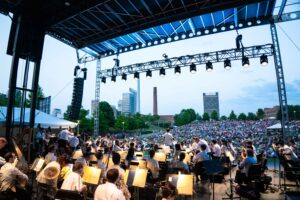
“When I recently became involved with the ASO, I quickly realized how much I had underappreciated it. The talent, dedication and passion behind this orchestra are extraordinary. These musicians and staff work tirelessly to create truly remarkable experiences: live performances at an artistic level that seem like genuine miracles. Just think about it: 50 or more musicians working together in careful coordination to spontaneously create musical wonders right before your ears and eyes. They are instantaneous, unedited, unfiltered, organic, analog, live and in-person.”
Read the full letter from board member Douglas Croker to the editor here.
Blogs
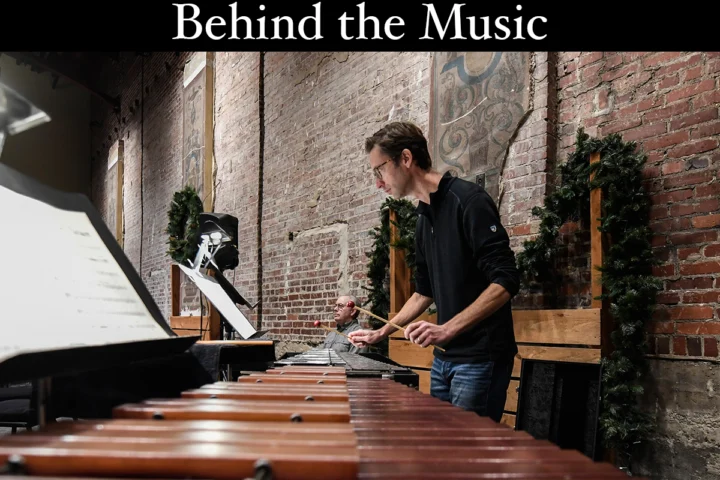
Behind the Music: Principal Percussionist Mark Libby on Snare Drums, Trash Cans, and the Triangle
Welcome and Introduction In April 2026, ASO’s Insider Evenings series welcomed Principal Percussionist Mark Libby for an intimate conversation with donors — his first time speaking at one of these events. What followed was a candid, wide-ranging discussion about his life in music, his journey to Birmingham, and the surprisingly vast world of percussion. Mark...Continue reading→

Behind the Curtain: Meet Some of the People Who Help Bring Music to the Stage
“Every time the Alabama Symphony Orchestra takes the stage, audiences experience the culmination of countless behind-the-scenes decisions.” An interview with Clay A. McCollum, Director of Artistic Administration, and Nick Ciulla, Personnel Manager and Acting Principal Trumpet Every time the Alabama Symphony Orchestra takes the stage, audiences experience the culmination of countless behind-the-scenes decisions. Who plays...Continue reading→
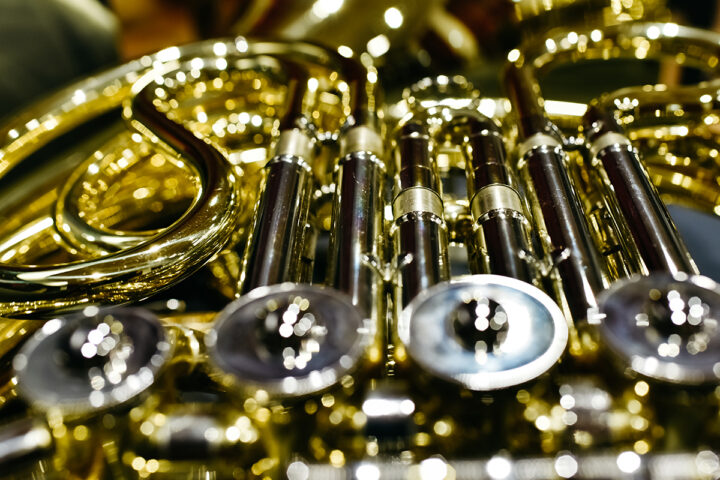
Behind the Brass: How Alabama Symphony Orchestra Musicians Shape Sound Through Art and Engineering
.. time In a previous blog post, writer Nicky Swett heard from ASO string players about their experiences searching for instruments. In this article, he speaks with Alabama Symphony Orchestra musicians about how they came to their wind and brass instruments. The contrast between searching for brass instruments and string instruments I began by asking...Continue reading→
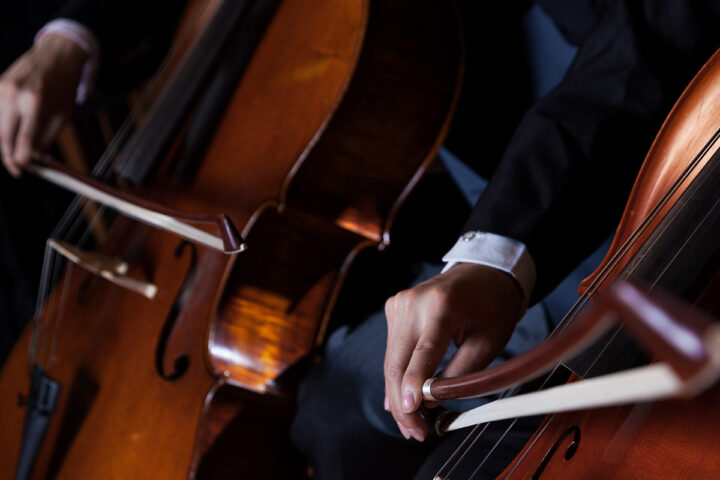
Behind the Strings: How Alabama Symphony Orchestra Musicians Find Their Perfect Instruments
. Cellist, writer, and musicologist Nicky Swett speaks with Alabama Symphony Orchestra musicians Lauren Peacock and Boyu Li about how they came to the string instruments they play on. The transition from early beginnings to “The Search” Many string players have little memory of the very first instruments they used. “I started on violin when...Continue reading→

Honoring a Loyal Veteran: Retired Master Sergeant George Coward and the Alabama Symphony Orchestra
The Alabama Symphony Orchestra (ASO) community honors our veterans for their vital contributions to defending our freedom. We can genuinely honor veterans by deepening our understanding of their experiences and supporting them in meaningful ways that address their needs and challenges. Here, we say “thank you for your service” with this feature about one veteran,...Continue reading→
Behind the Music: Insider Scoop on Producing “South Pacific” in Concert with the ASO
From the desk of Clay A. McCollum, ASO’s Director of Artistic Administration When I’m asked, “Hey, Clay, what are you most excited for in the 2025-2026 season?” my immediate reaction is this: “I’m excited that the orchestra is producing Rodgers and Hammerstein’s South Pacific in concert in January 2026.” Hi, I’m Clay McCollum, ASO’s Director...Continue reading→
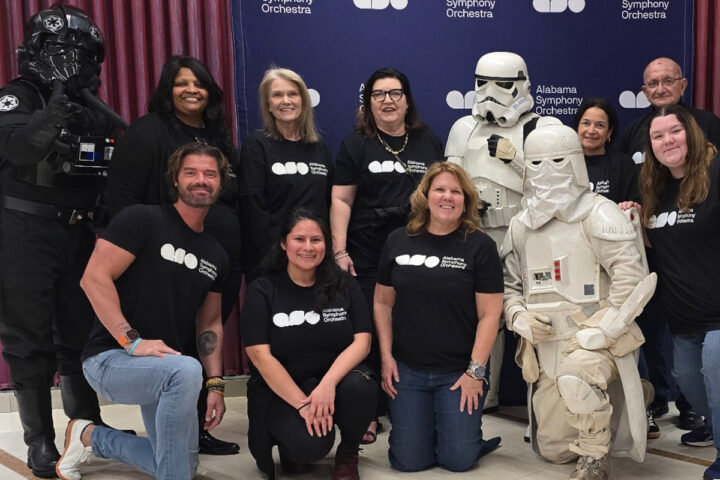
Reflections on a season volunteering with the Alabama Symphony Orchestra
Music has always meant a great deal to me, as it does to many of us. I believe it is hardwired into us to some degree. That is how people who have never played an instrument may have a sense of rhythm or harmony. I played trumpet and baritone throughout my school years, but like...Continue reading→
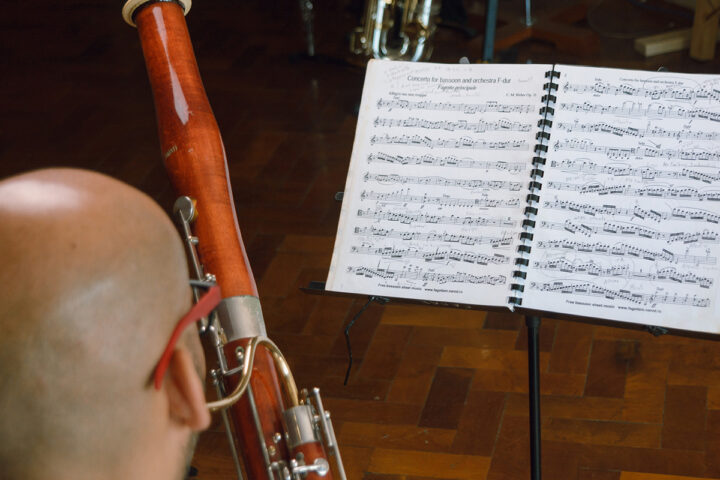
A Grand Pause: Passing the summer with ASO musicians
In a new series of Alabama Symphony blog posts, cellist, writer, and musicologist Nicky Swett interviews ASO musicians about their summer activities. On May 25, 2025, the Alabama Symphony Orchestra rounded out the 2024-25 season with the rousing fanfare at the beloved annual free concert series “Symphony in the Summer” at Birmingham’s Railroad Park....Continue reading→
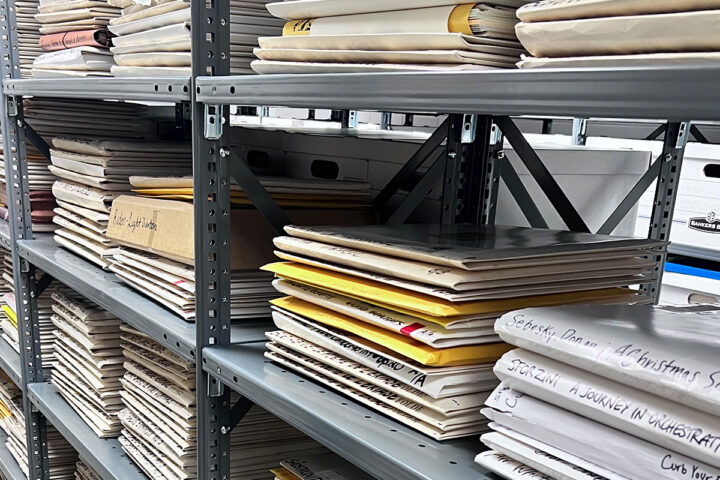
Behind the Scores: Meet the Orchestra Librarian
By Emma Kosht, Alabama Symphony Orchestra Librarian The first piece of tonight’s program has just concluded, and Maestro has exited the stage. Without much ado, a person carrying a score (a book of music from which the conductor conducts) walks out onto the stage and steps onto the podium. You may be wondering who that...Continue reading→

Letter to the editor: Alabama Symphony Orchestra is a forgotten musical treasure
This article appeared in the Hoover Sun on June 19, 2025. “When I recently became involved with the ASO, I quickly realized how much I had underappreciated it. The talent, dedication and passion behind this orchestra are extraordinary. These musicians and staff work tirelessly to create truly remarkable experiences: live performances at an artistic level...Continue reading→